What We Do
We don't just run programs; we ignite a four-stage bio-economic sequence. We call this the Vinyasa—a deliberate flow where environmental restoration creates the mechanical requirement for indigenous wealth.
Detailed Activity Breakdown
Explore the sequential stages of the Integral Model.
Rainwater Harvesting
We implement community-managed catchment systems to capture monsoon runoff, providing the essential water security needed for year-round silk cycles.
Land Restoration & Contouring
Rebuilding the earth’s skeletal structure to prevent topsoil loss and ensure year-round hydration for the bio-engine.
Social Infrastructure
Building the local governance structures required to manage common environmental resources.
Enriching Soil Health
Using fungal-dominant composting and vermiculture to restore the microbial "battery" of depleted soils.
Biological Nutrient Management
Replacing chemical dependencies with closed-loop bio-stimulants derived from local plantations.
Host Plantation Ecosystems
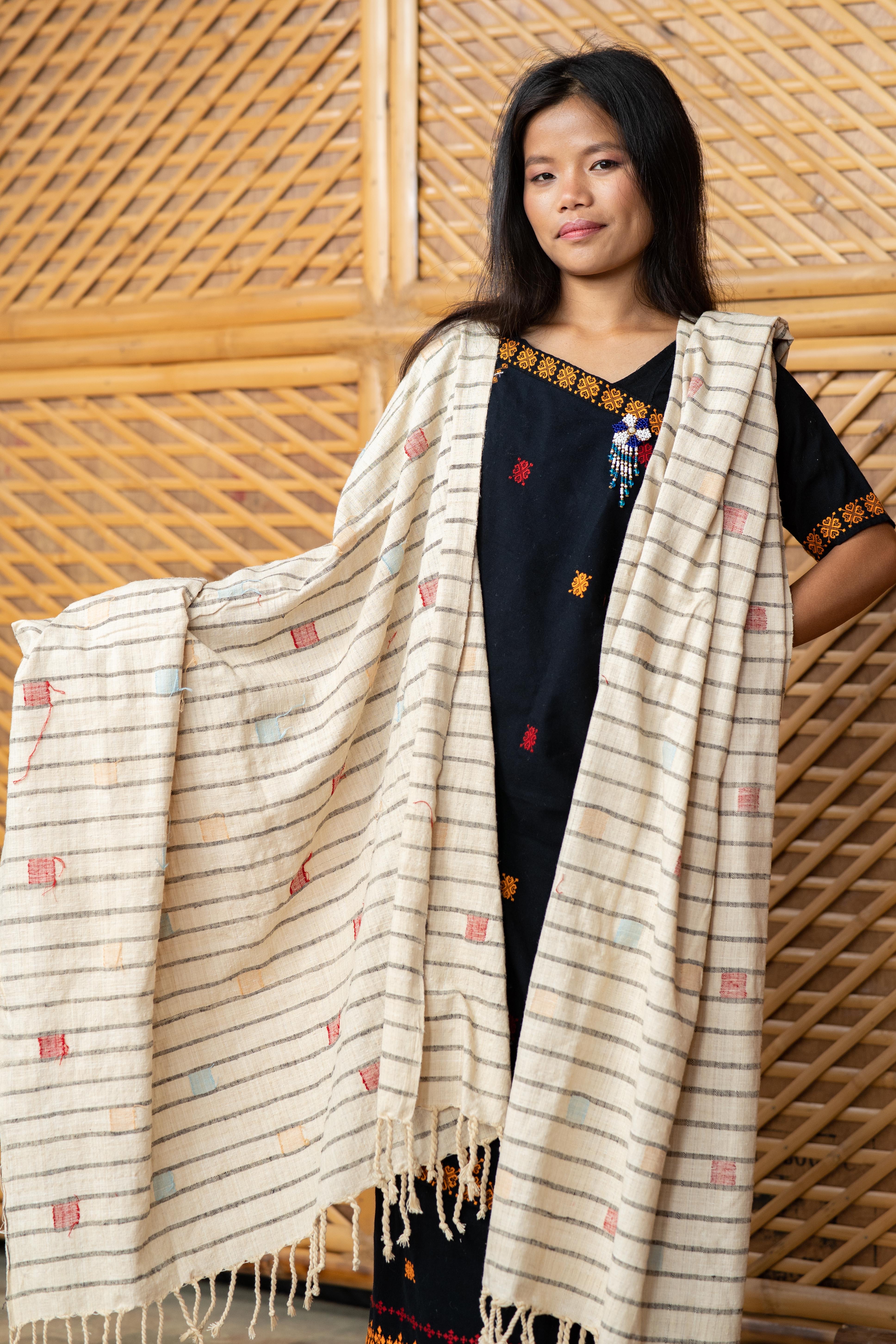
Establishing diverse agroforestry zones (Castor, Mulberry, and Som) that act as the primary feed source for the heritage silks: Ahimsa Silk, Mulberry silk, and Muga Silk.
Master-Led Skill Development
Transforming traditional labor into high-value mastery through apprenticeship with expert weavers, spinners, dyers and silk rearers.
Handcrafted Silk Products
By layering Kerria lacca insects into the canopy, we harvest natural resin used for traditional dyes and industrial applications without harming the trees.
Artisanal Multiliers
Diversifying income streams through "Beyond Silk" outputs. We integrate beekeeping, lac cultivation, blackberry plantations and more to our sericulture ecosystem; which integrate naturally as an extension.
The Digital Gaongiri Bridge
A direct-to-consumer platform that bypasses exploitative middlemen and connects artisans to global capital.
The 80-20 Framework
A radical financial framework where 80% of value is returned directly to the village-level ecosystem.
Market Alignment & Logistics
Providing the technical infrastructure for rural communities to manage their own local & global supply chains.
The Role of Gaongiri: The Digital Bridge
To protect our 80% direct-to-village commitment, we built Gaongiri—a digital marketplace that creates a direct link between rural artisans and conscious consumers worldwide.
By eliminating exploitative middle-layers and "hidden costs" that traditionally drain rural wealth, every product purchased through Gaongiri validates the Integral Model, turning a marketplace transaction into a revolutionary act of support.
- Direct artisan-to-consumer connection
- Full transparency on pricing and impact
- Authentic, handcrafted products with provenance
- Every purchase funds the bio-economic ecosystem
The Vinyasa of Value Creation
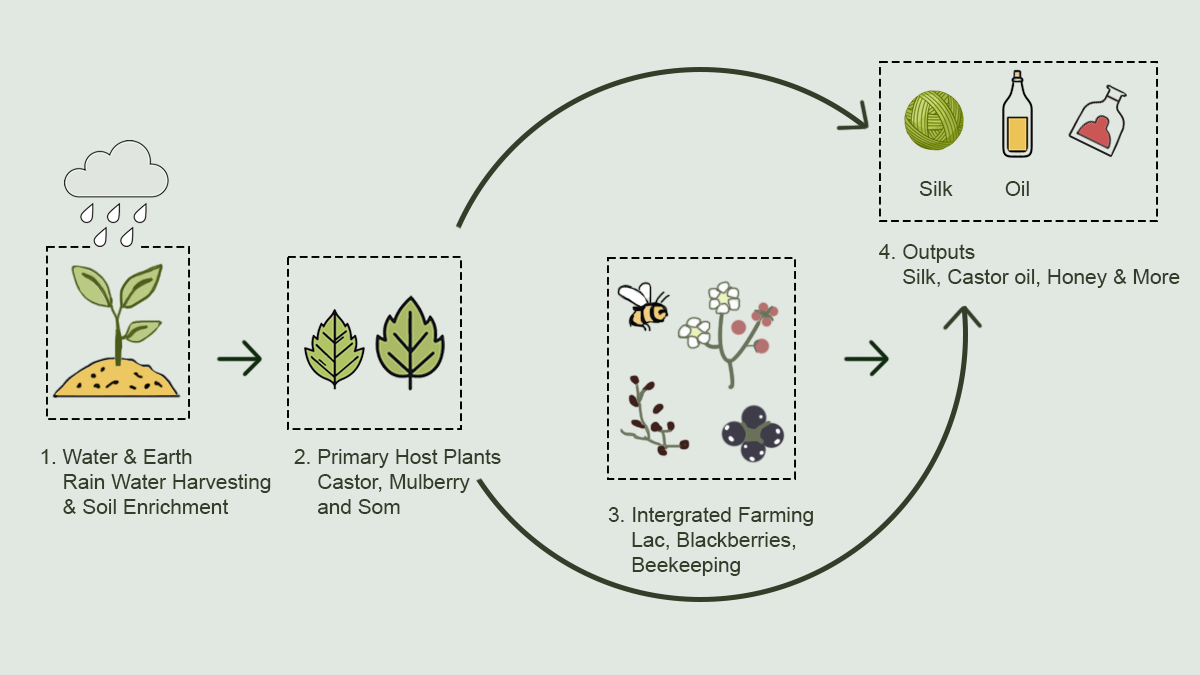
Water & Earth (The Foundation)
We begin with Rainwater Harvesting to ensure year-round resilience and Soil Enrichment to prepare the bio-engine.
The Bio-Engine (Primary Host Plants)
We plant Castor, Mulberry, and Som trees—the specific nutrients required for Eri, Mulberry, and Muga silkworms.
The Ecosystem Multipliers (Integrated Farming)
We layer in Beekeeping, Lac, and Blackberries. These species work in synergy to boost pollination and diversify village income.
The Marketplace (Outputs)
The result is a zero-waste harvest of Ahimsa Silk, Mulberry Silk, Muga Silk, Castor Oil, Forest Honey, Lac Powder, and Blackberries.
What Makes the Integral Model Different
Traditional Development
- Single-issue focus (poverty OR environment)
- External experts design solutions
- Technology transfer without cultural context
- Short-term projects with exit strategies
- Economic metrics as primary success measure
- Communities as beneficiaries
Integral Approach
- Addresses interconnected systems holistically
- Communities lead, we support
- Honors indigenous knowledge + modern science
- Long-term partnership for sustained transformation
- Wellbeing across all dimensions of life
- Communities as co-creators and knowledge holders
Impact Stories
Real transformations from the field.
Lakshmi's Vinyasa: From One Crop to Five Streams of Income
The Challenge
Lakshmi Devi used to rely solely on seasonal silk farming. If the monsoon was late or the market price dipped, the family faced months of debt. With no backup income, one bad season meant borrowing at high interest rates just to survive.
The Integral Difference
With our support, they first built rainwater harvesting tanks, ensuring their land stayed fertile during the dry season.
They replaced depleted land with Castor and Mulberry plantations, creating a sustainable food source for silkworms.
They layered in Beekeeping and Lac cultivation, transforming their silk farm into a thriving, interconnected ecosystem.
The Result
Lakshmi now manages five distinct revenue streams: Silk, Castor Oil, Forest Honey, Lac Powder, and Blackberries. Because of our 80% direct-to-artisan model, she earned 40% more this year than under traditional systems.
Read more stories →"I no longer fear the weather. When the rain is late, I have the honey. When the silk market is slow, I have the oil. My land finally works as one."
— Lakshmi Devi, Majuli
Our Impact in Numbers
Support the Integral Model
Your contribution funds holistic transformation that honors tradition, restores nature, and builds dignified livelihoods across generations.