Why We Exist
In the lush valleys of North East India, ancient traditions face modern threats. We exist to bridge this gap—preserving heritage while building sustainable futures.
The Crisis We Address
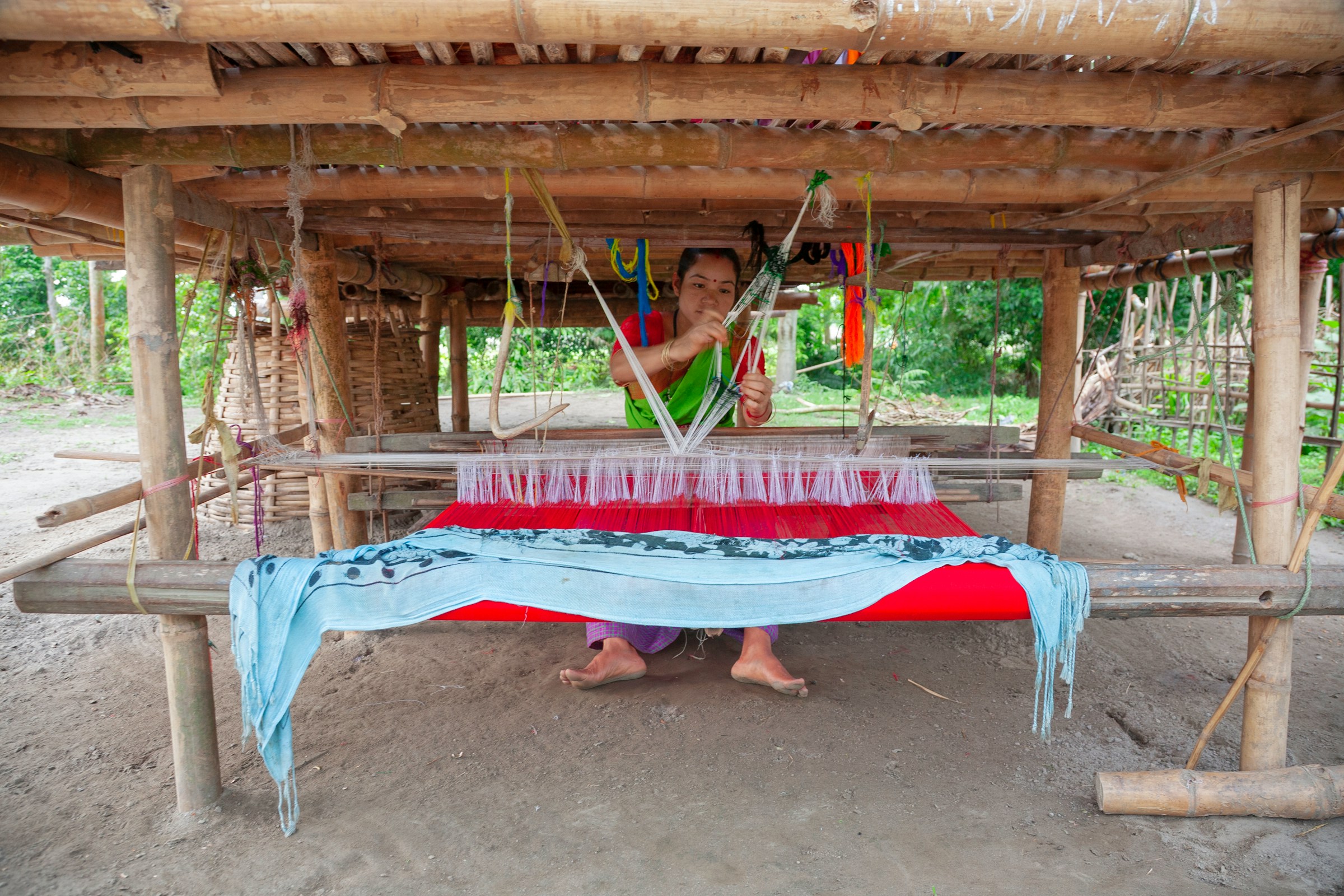
North East India is home to some of the world's most exquisite silk traditions—Muga, Eri, and Pat silks that have been woven for centuries. But today, these living traditions face extinction.
Climate change disrupts traditional farming cycles. Young people migrate to cities, leaving villages without the next generation of artisans. Middlemen capture most of the value, leaving skilled weavers in poverty.
Without intervention, we risk losing not just crafts, but entire knowledge systems, cultural identities, and sustainable ways of living that have thrived for generations.
The Scale of the Challenge
The Interconnected Challenges
These issues don't exist in isolation—they reinforce each other in a cycle that's difficult to break.
Climate Vulnerability
Erratic rainfall and rising temperatures disrupt mulberry cultivation and silkworm rearing cycles, reducing yields and increasing uncertainty for farmers.
Economic Marginalization
Complex supply chains mean artisans receive only 10-15% of final product value. Without fair market access, skilled work doesn't translate to dignified incomes.
Knowledge Loss
As elders pass away and youth migrate, centuries of accumulated wisdom about sustainable practices, traditional designs, and cultural significance disappears.
Gender Inequality
Women do most of the weaving work but have limited control over income, decision-making, and market access—perpetuating cycles of dependence.
Ecosystem Degradation
Short-term pressures lead to unsustainable practices that damage the very ecosystems silk production depends on, threatening long-term viability.
Our Response
We address these challenges holistically, recognizing that lasting change requires working on multiple fronts simultaneously.
Restore Ecosystems
We work with communities to implement regenerative agriculture practices that improve soil health, conserve water, and increase biodiversity—creating resilient foundations for silk farming.
Build Fair Markets
We connect artisans directly to conscious consumers, eliminating exploitative middlemen and ensuring fair prices that reflect the true value of their craft.
Preserve Knowledge
We document traditional techniques, support master-apprentice relationships, and create platforms where indigenous knowledge is valued and transmitted to new generations.
Empower Women
We form women's self-help groups, provide financial literacy training, and ensure women have direct control over their earnings and business decisions.
Strengthen Communities
We invest in local leadership, support community-led decision making, and help villages become self-sustaining centers of innovation and prosperity.
Adapt to Climate
We blend indigenous weather knowledge with modern climate science to help communities anticipate changes and adapt their practices accordingly.
"We envision a future where traditional knowledge and sustainable practices create dignified livelihoods—where communities thrive not despite their heritage, but because of it."— Integral Foundation Vision
Why North East India
This region is uniquely positioned at the intersection of urgent need and extraordinary potential.
- Unmatched biodiversity: Home to Muga silk, the golden fiber found nowhere else on Earth
- Living traditions: Centuries-old weaving practices still in active use
- Climate frontlines: Among the regions most affected by climate change in India
- Underserved communities: Limited access to development resources and market opportunities
- Resilient people: Strong community bonds and deep connection to land and tradition
Join the Integral Movement
Every contribution helps preserve ancient traditions while building sustainable futures for artisan communities.